Establish a trusted national baseline,and lead with foresight.

Child Online Safety (COS) Assessments measure your whole national system — children, government, families, schools, and the platforms reaching them — against global standards. So you can see what is working, what is missing, and where to act first.

Child Online Safety Assessments ecosystem overview and indicators
The ecosystem

A child’s safety is decided by everyone around them

No single measurement explains why children are at risk. COS Assessments read the whole system at once — the child at the center, and the five groups whose decisions shape their online life.

Select the child or Government to open its assessment below — the other four are coming soon.

What you can assess

Six assessments. One picture of the system.

The question it answers

How ready are our children for life online, and where are they most exposed?

Delivers

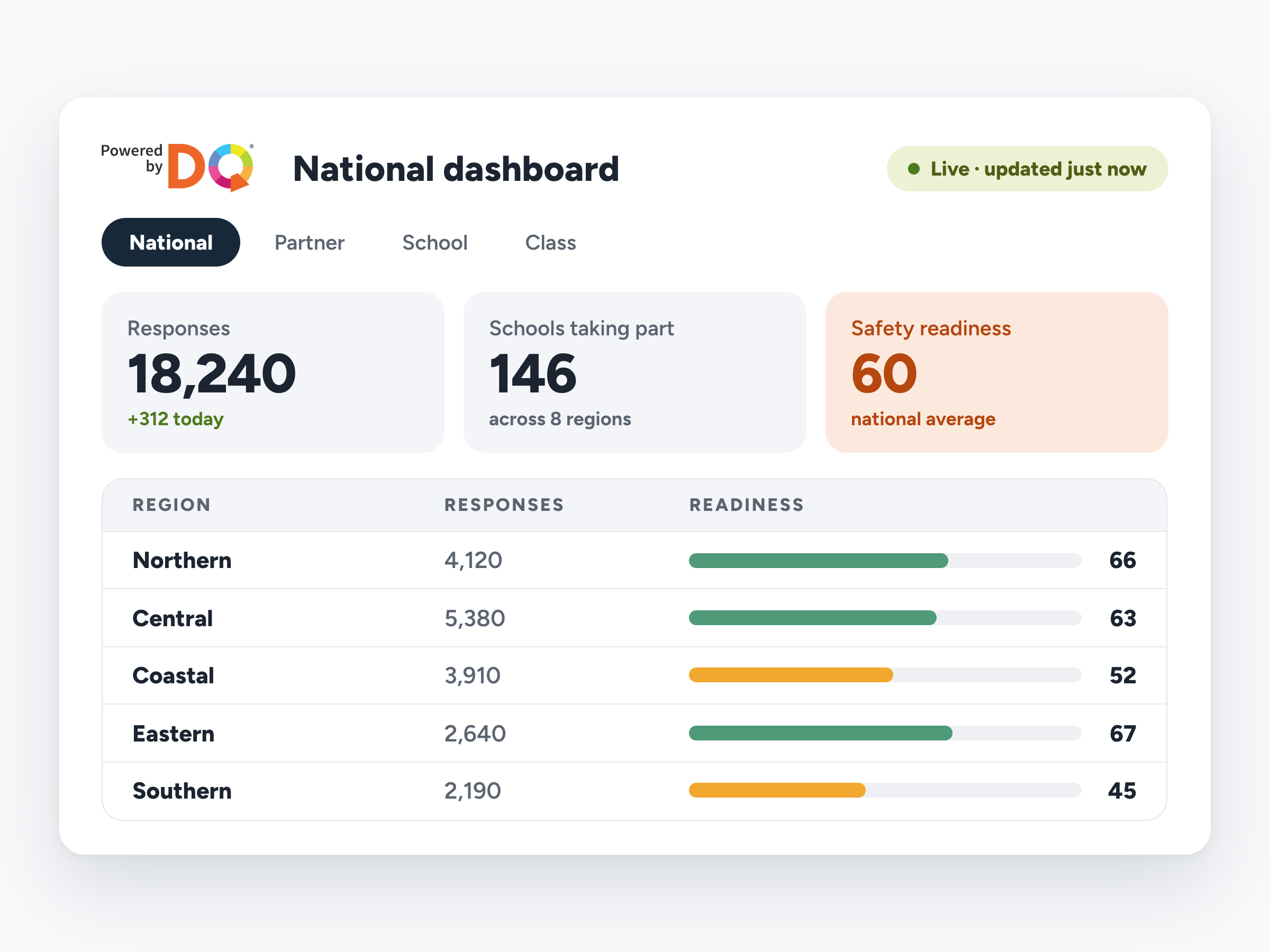
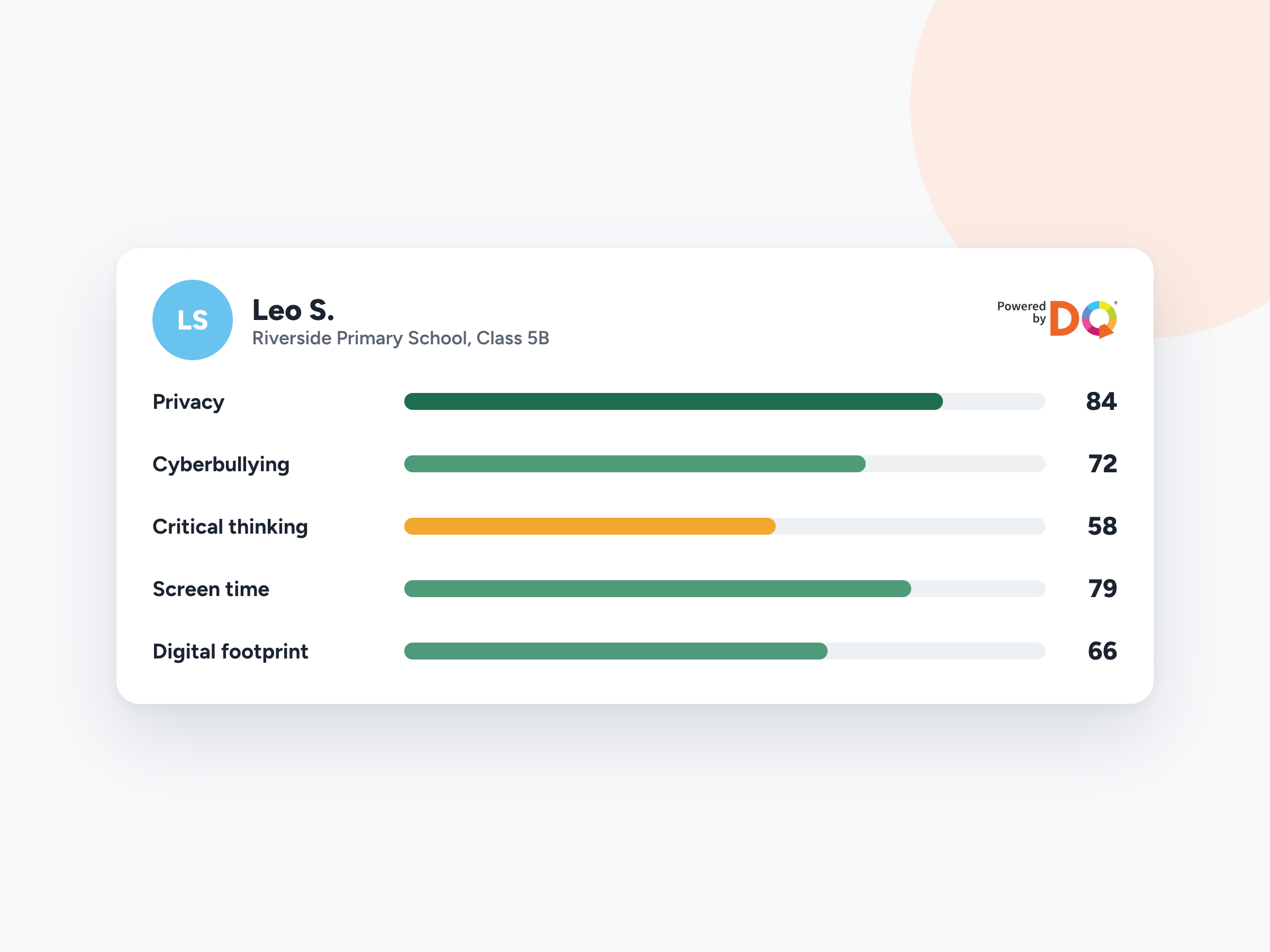
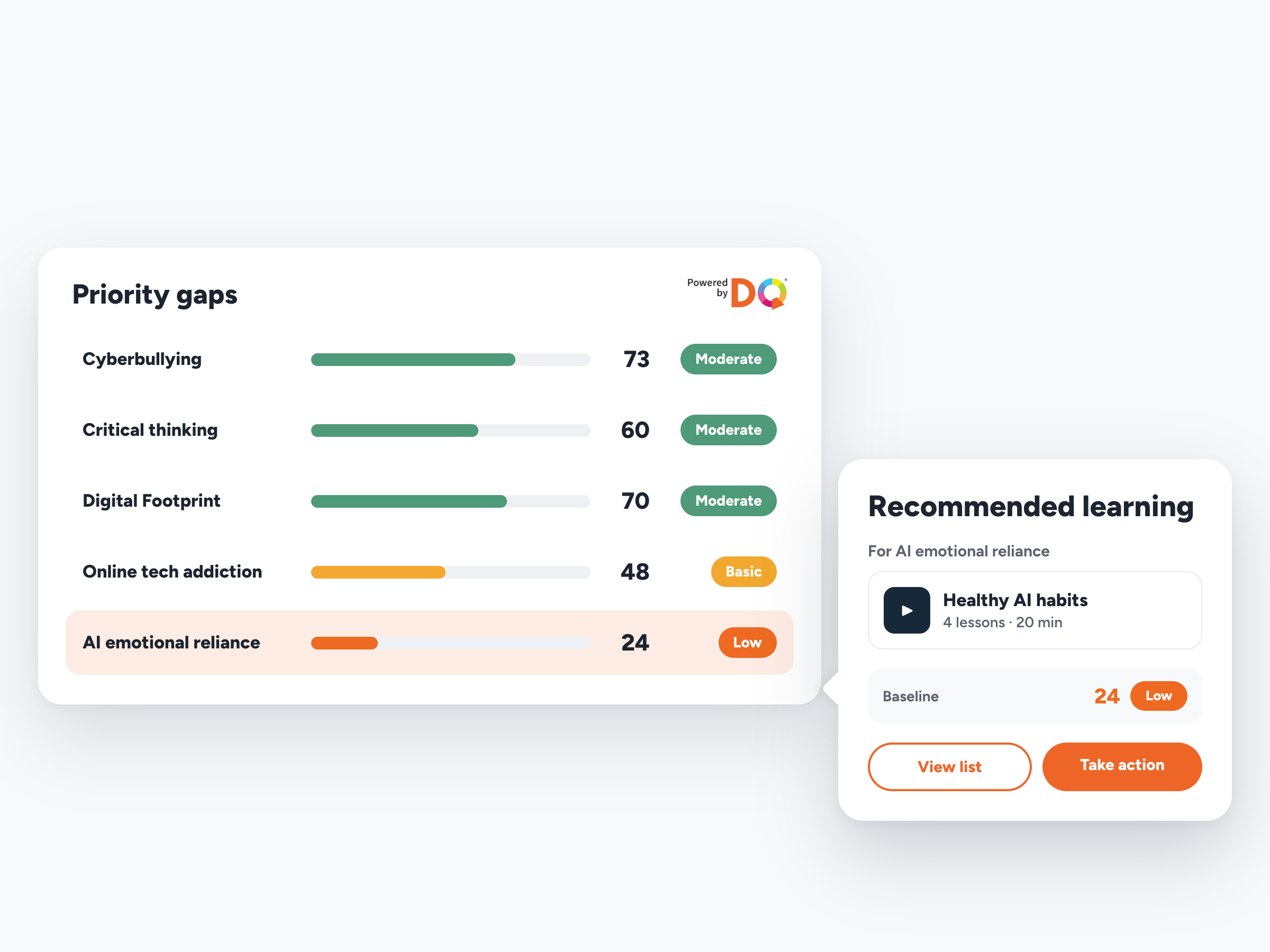
National, partner, school, class and individual dashboards and scorecards · comparisons against national and global benchmarks · clear identification of the priority areas where children need the greatest support.

COS Children Assessment · in depth

15

capability indicators

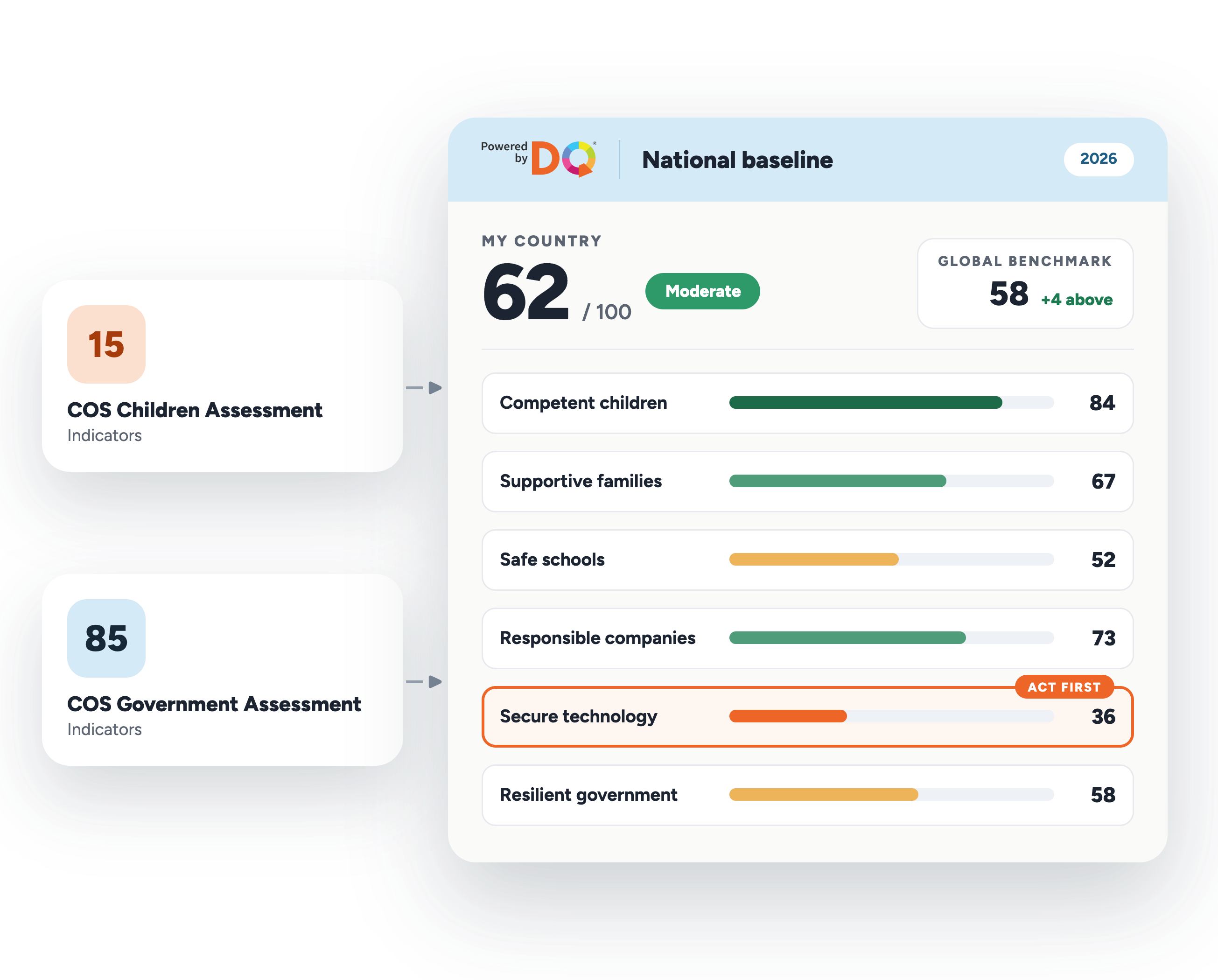
The COS Children Assessment measures 15 child capability indicators aligned with the Child Protection in Cyberspace (CPC) Index.

These indicators complement the 85 system indicators assessed through the COS Government Assessment. Together, they form the evidence base of the CPC Index.

The COS Children Assessment is available for schools and education systems to measure children’s online safety capabilities and identify priority areas for action.

What it measures

Online safety readiness

How well children understand and apply the knowledge, skills, attitudes, and behaviors needed to navigate digital life safely and responsibly.

Online risk experience

What children are actually encountering — cyberbullying, harmful content, unwanted contact, AI-related risks — not what adults assume they are encountering.

Support around the child

The access, guidance, conversations, and protective factors children experience at home and at school.
Ages8–18
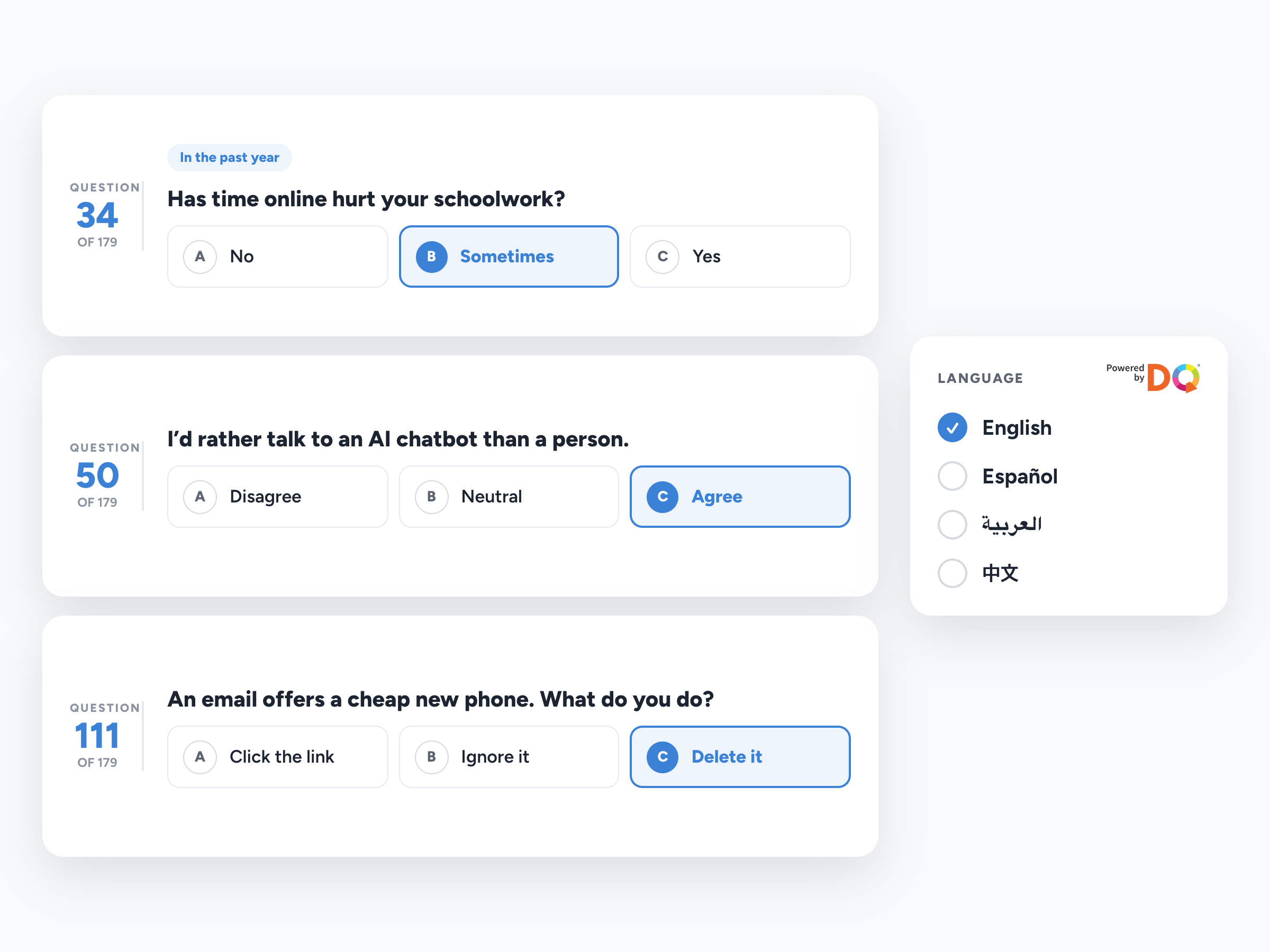
Questions179, across 7 sections
Completion~45 minutes
Deploymentfrom a single class to a whole country
Solution components
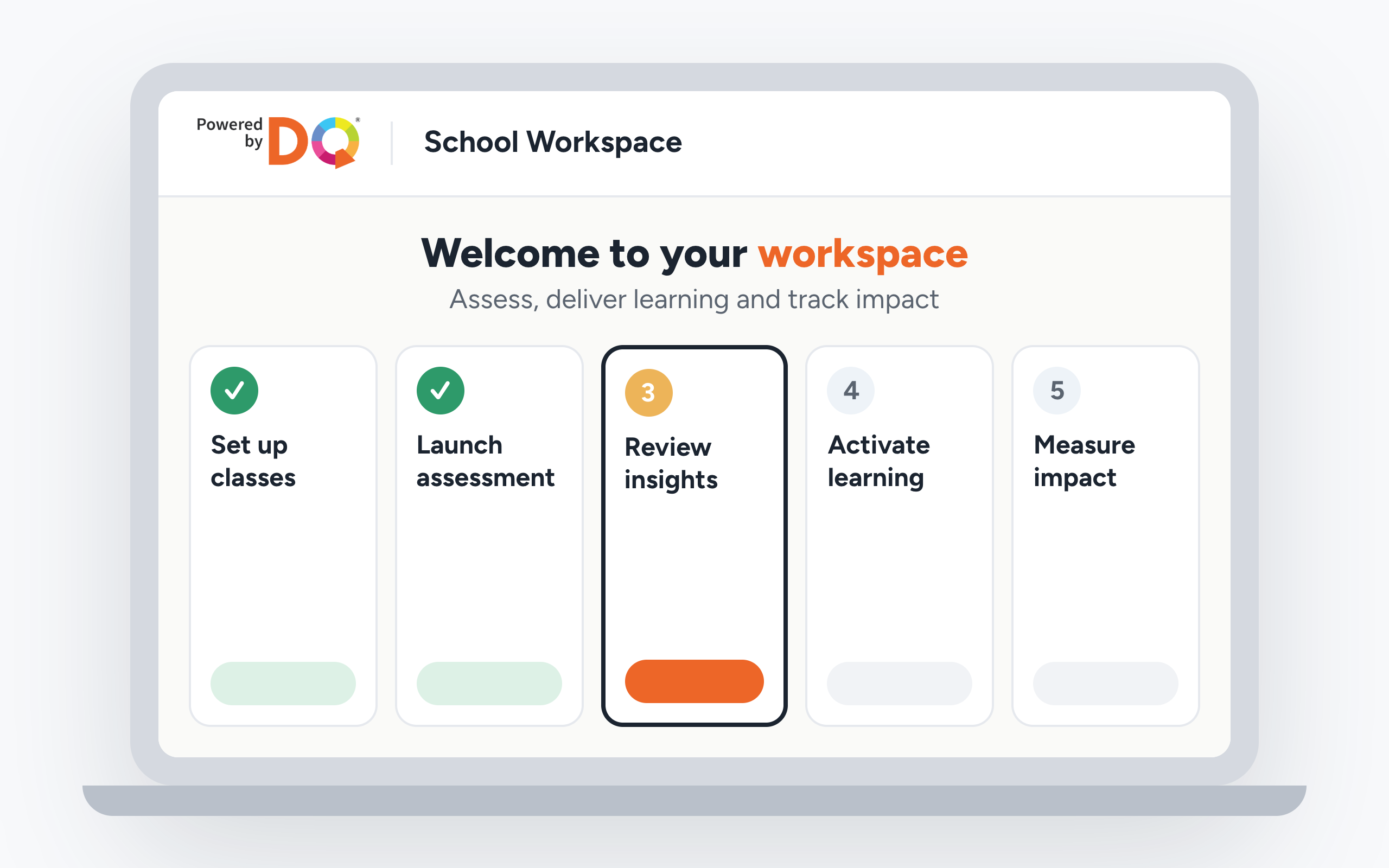
School workspace screenshot

School workspace

Where schools set up cohorts, run assessment rounds and manage access.
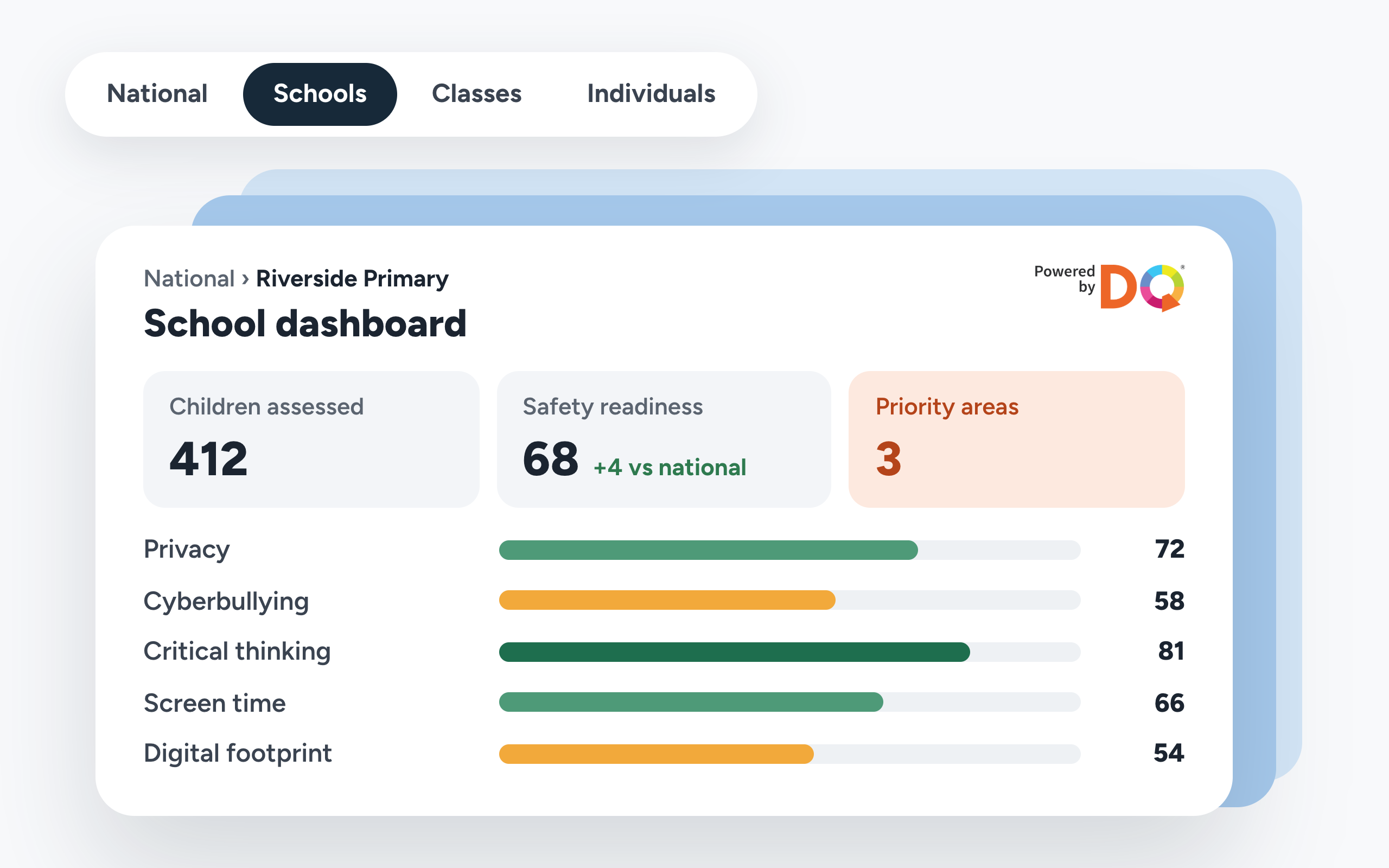
Dashboards screenshot

Dashboards

Results roll up from each child to class, school and national level.
NationalSchoolsClassesIndividuals
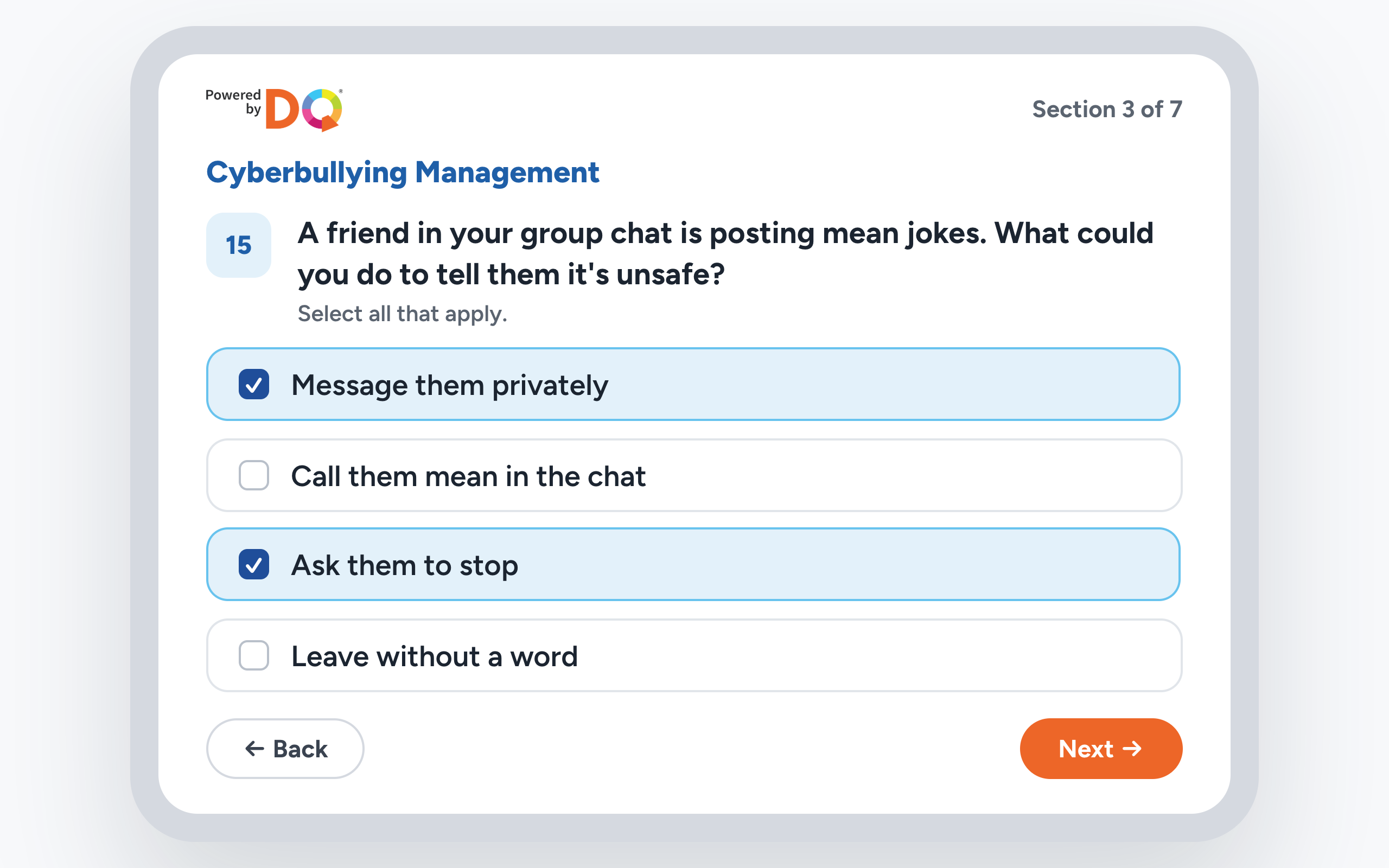
Assessment app screenshot

Assessment app

The child-facing assessment experience, ages 8–18.
What you get

Every deployment delivers four things

From the assessment itself to the decisions it enables — this is what lands in your hands, whether you deploy to one class or a whole country.

The assessment itself
01

The assessment itself

A self-administered online assessment — age-appropriate for children, evidence-based for governments — deployed in your languages, on your timeline.

Live dashboards
02

Live dashboards

National, partner, school and class views that update as responses arrive. No waiting for a report at the end of fieldwork.

Scorecards for parents and children
03

Scorecards for parents and children

Personal scorecards that help parents and children understand their strengths and weaknesses in online safety — benchmarked against national and global standards.

Priority-gap report
04

Priority-gap report

The gaps ranked by potential impact, with recommended actions — the evidence base for budget cases, policy, and program design.

This is what it looks like at global scale

The Global Cybersecurity Forum built the CPC Index on this instrument, with ITU, UNICEF, WeProtect, and DQ Institute — reaching 100+ countries with a single mission: cut child cyber-risk by 15% in five years.

Read the CPC Index story →

From a single class to a whole country.